

Jabal al-Nour, northeast of the Grand Mosque in Makkah, is home to the Cave of Hira. The mountain is closely connected to the life of Prophet Muhammad ﷺ, who received the first Quranic revelation there.
Visitors interested in the story of revelation, Islamic history or things to do in Makkah may consider a visit, while remembering that reaching the cave involves a difficult uphill climb.
This guide explains the cave’s significance, what the climb involves and what visitors may find at the summit. The account of the first revelation is central to the site’s history, while Masjid al-Haram has a distinct place in Muslim worship. Consider your health and ability before setting out, and allow for the effort of the ascent.
What Is the Cave of Hira?
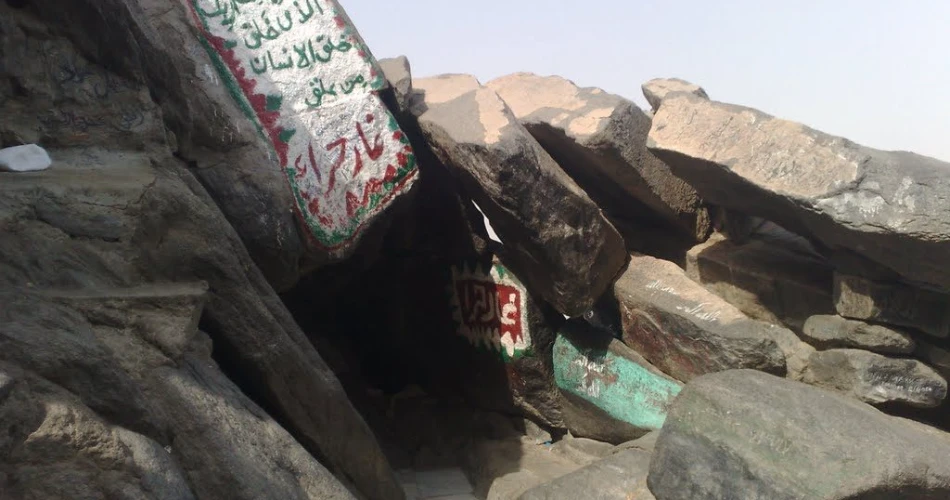
The Cave of Hira is at the summit of Jabal al-Nour, northeast of the Grand Mosque in Makkah. The mountain is also known as the Mountain of Light. The cave is a narrow opening among the rocks, with room for around four or five people. Its modest size is noticeable after climbing the mountain.
The cave is known as the place where Prophet Muhammad ﷺ received the first Quranic revelation, beginning with the command to read. Before his prophethood, he used to withdraw there for worship. The site connects his earlier periods of retreat with the beginning of revelation.
Hira Cultural District is about 0.9 km from Jabal al-Nour in a straight line. That is the direct distance between the two places, not the route a visitor would walk or drive.
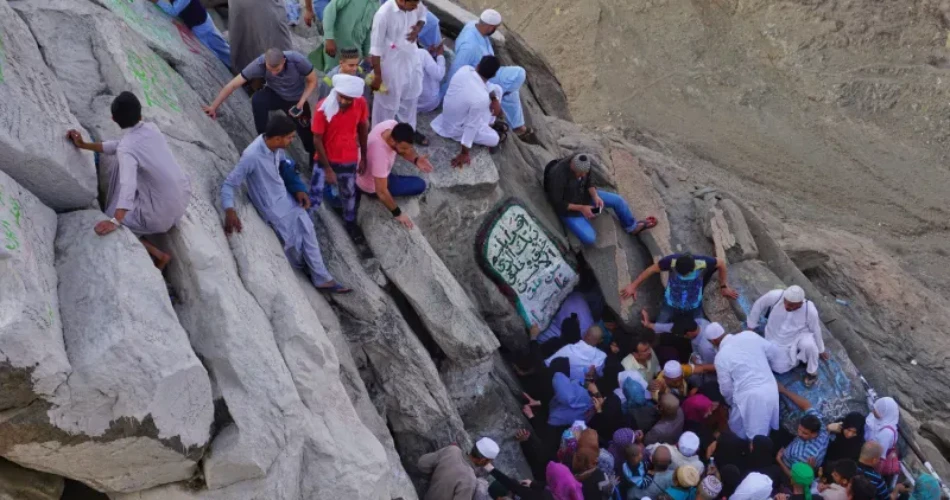
The Cave of Hira Story
Before the first revelation, Prophet Muhammad ﷺ would withdraw to the Cave of Hira for worship. The cave became associated with these periods of retreat, away from everyday concerns. The first revelation later made it a significant place in the story of Islam.
In the account of revelation, Jibreel (peace be upon him) came to Prophet Muhammad ﷺ and delivered the command to read. The Prophet ﷺ replied that he could not read, and the command was repeated. Jibreel (peace be upon him) then recited the opening verses of Surah Al-Alaq:
“Read in the name of your Lord who created, created man from a clot. Read! And your Lord is the most generous, who taught by the pen, taught man what he did not know.”
(Surah Al-Alaq, 96:1-5)
This account explains the cave’s connection with the beginning of Quranic revelation. It gives visitors context for the climb: Hira is a place described in the life of the Prophet ﷺ, rather than a large complex or building.
Why Did the Prophet ﷺ Go to the Cave of Hira?
 ﷺ Go to the Cave of Hira?" width="950" height="500" srcset="/ri/480/blog/posts_images/more_imgs/175322049842-a-complete-experience-at-mount-hira.webp 480w, /ri/780/blog/posts_images/more_imgs/175322049842-a-complete-experience-at-mount-hira.webp 780w, /blog/posts_images/more_imgs/175322049842-a-complete-experience-at-mount-hira.webp 950w" sizes="(max-width: 767px) 100vw, 768px" loading="lazy" decoding="async">
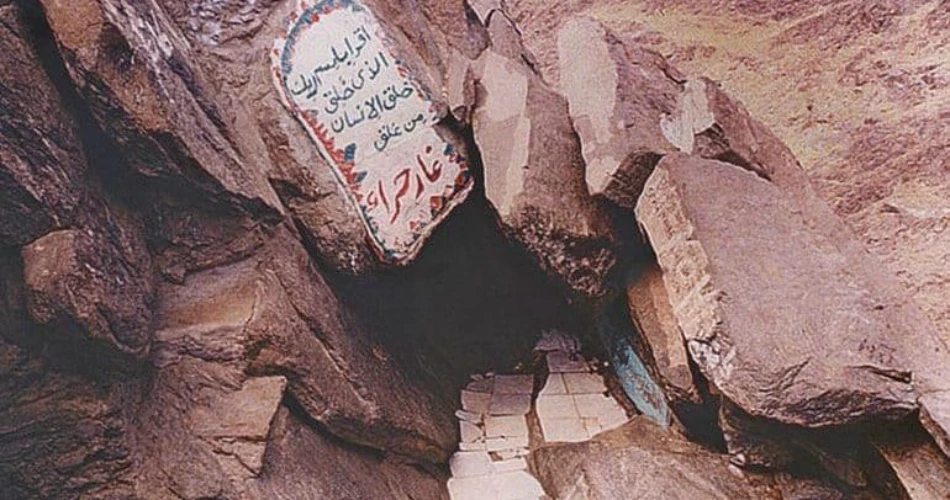
Prophet Muhammad ﷺ used to withdraw to the Cave of Hira for worship before his prophethood. His retreats are part of the site’s significance, alongside the first revelation that took place at the cave. Reaching it requires an ascent up the mountain from the area below.
The account describes the Prophet ﷺ spending time in worship and returning to his family before making further retreats. The first revelation came during one of these periods. Jibreel (peace be upon him) brought the command to read, and the opening verses of Surah Al-Alaq were revealed.
This background explains why Hira is remembered. Visitors can consider the place in connection with the Prophet ﷺ’s life and the beginning of revelation. The climb is difficult for older people and those who are ill, so weigh the physical demands rather than assuming the ascent is suitable for everyone.
Significance of Ghar-e-Hira
Jabal al-Nour is significant in Islamic history because the Cave of Hira is associated with the first Quranic revelation to Prophet Muhammad ﷺ. The account begins with the command to read and marks the start of the revelation of the Quran. The cave is also connected to the Prophet ﷺ’s earlier retreats for worship.
The Quran refers to the month of Ramadhan as the month in which the Quran was revealed (2:185), and mentions the Night of Decree (97:1). These references are often read alongside the account of revelation.
The cave’s historical association is distinct from Masjid al-Haram, which contains the Kaaba, the direction Muslims face in prayer. Visitors come to Hira to see the site and consider its place in the Prophet ﷺ’s life.
Hira Cultural District is a nearby project described as including a visitor center, a Revelation Exhibition, a Holy Quran Museum and a route up to the cave. The district is about 0.9 km from Jabal al-Nour in a straight line. The Ministry of Hajj and Umrah provides a directions link for the Cave of Hira site.
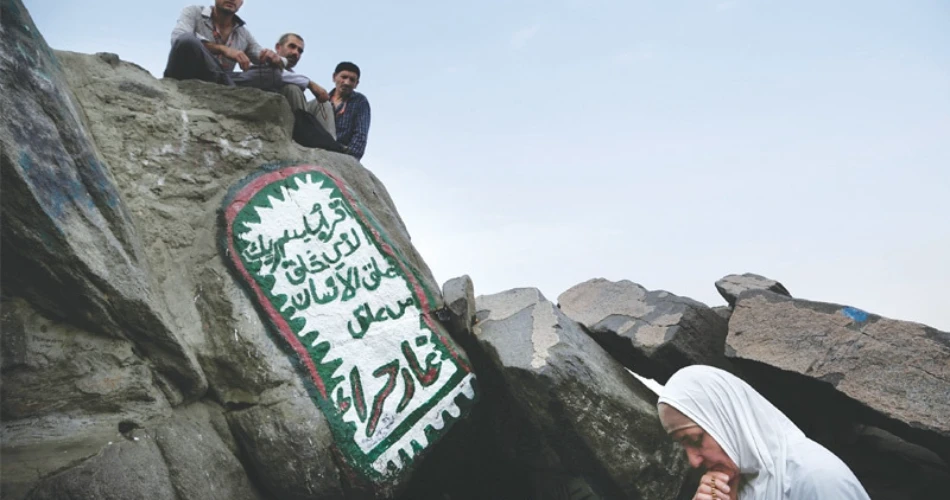
Inside the Cave of Hira
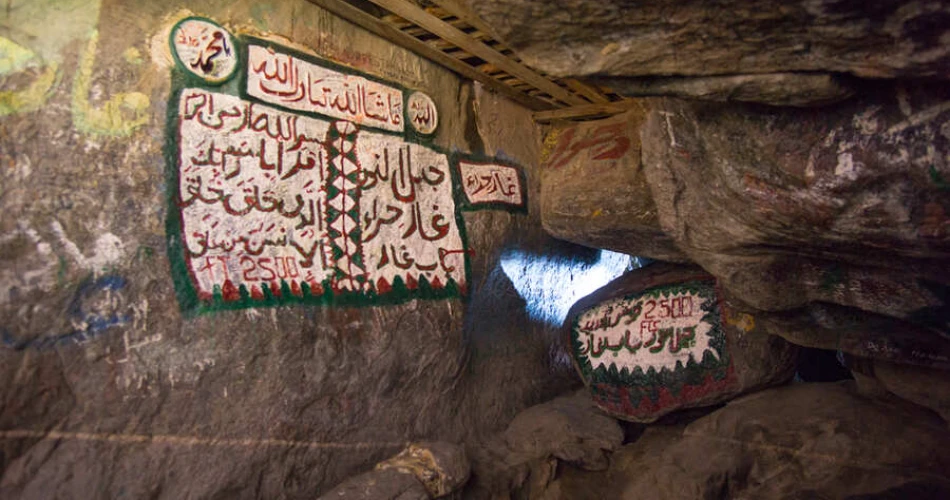
The Cave of Hira is a small, narrow space at the summit of Jabal al-Nour, with room for around four or five people. Visitors should not expect a broad chamber. The entrance and interior are formed by rock, and the confined space can be noticeable after the climb.
The cave is remembered as the place where Prophet Muhammad ﷺ received the first Quranic revelation. Visitors may reflect on that history while being considerate of others who have also made the ascent and may be waiting to enter. The limited space means a visit inside is brief compared with time in an open area.
Jabal al-Nour is a mountain site, not a level walk from the city. The climb can be difficult for older people and those who are ill. Consider the physical effort and limited space at the summit when deciding whether to make the ascent.
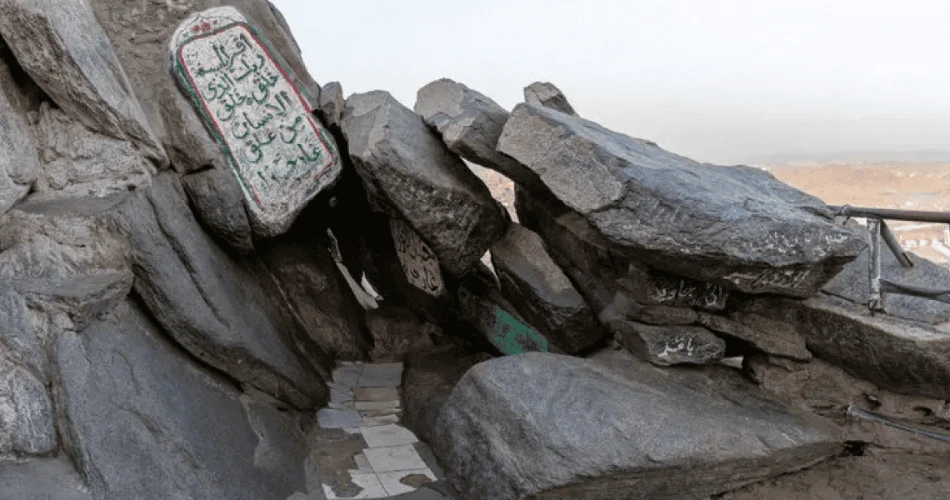
Trekking to the Cave of Hira
The Cave of Hira sits high on Jabal al-Nour, and reaching it means climbing uphill from the base. The route description gives an approximate vertical ascent of 600 metres, with the cave around 50 metres below the summit.
It also describes a steep path, averaging about 35 degrees and becoming steeper near the cave. These figures indicate the terrain, though the climb can feel different depending on a visitor’s fitness and conditions on the day.
An average visitor may take about an hour to climb, although the estimate allows for longer in busy periods or hot weather. Rest stops and crowding can affect the time. Treat the duration as a guide, not a fixed schedule, and allow enough time for the ascent and return.
The Ministry of Hajj and Umrah notes that the climb is difficult for older people and those who are ill. Consider this before setting out, and do not assume the route is easy because the walk begins at the mountain’s base. The summit requires a sustained uphill climb, and the cave itself has limited room.
What To Do in The Cave Of Hira?
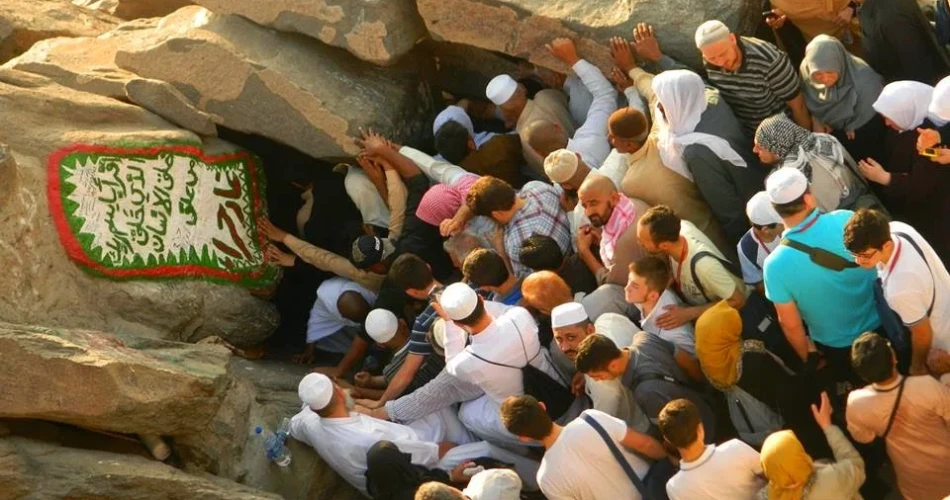
Visitors who reach the Cave of Hira may spend time reflecting on its connection to the life of Prophet Muhammad ﷺ and the beginning of Quranic revelation. The site’s significance comes from this history. Visitors may consider the account, make personal supplications or observe the place respectfully.
After visiting the cave, some people continue to the summit area to look out over Makkah. Remember that reaching the cave and returning involve the same difficult mountain route. Take account of your health and energy, and be considerate of others in the narrow cave and along the path.