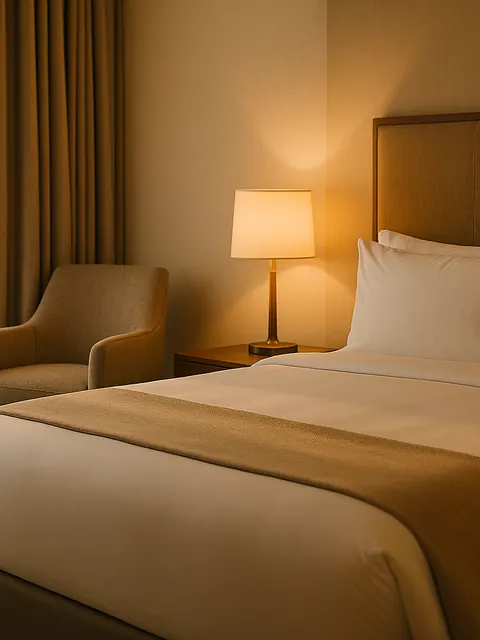
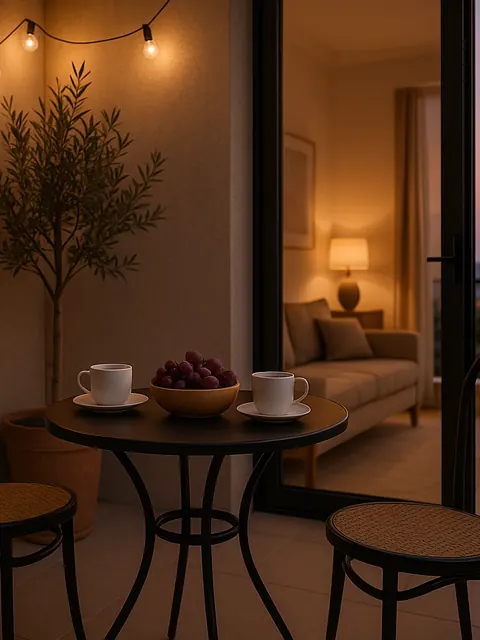
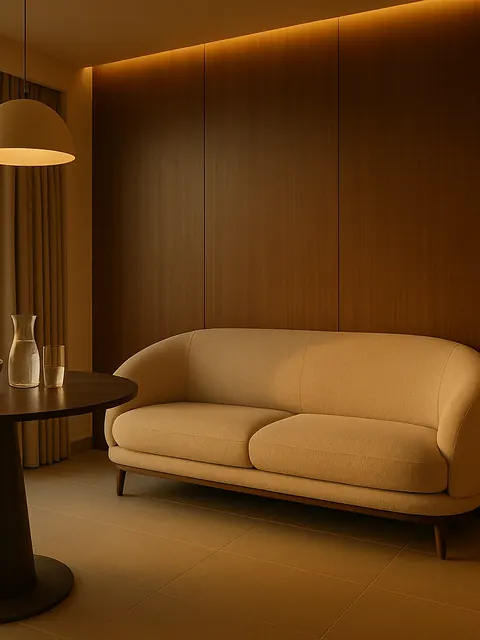
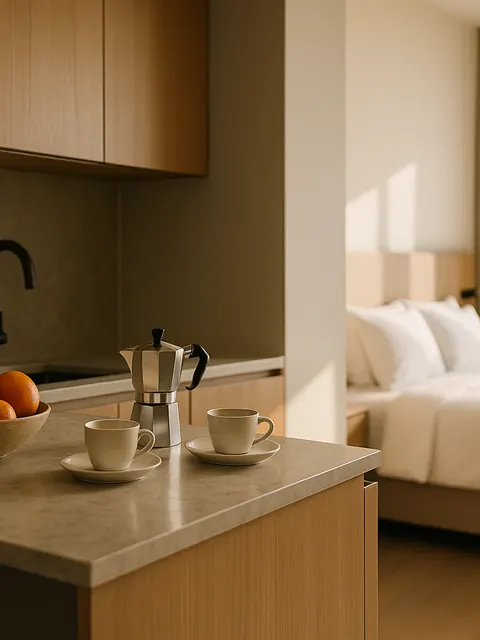
Raffles Makkah Palace
9.1Superb · 1,316 Reviews
King Abdul Aziz Endowment Abraj Al Bait Near King Abdul Aziz Gate 21955 Makkah Saudi Arabia | Makkah, 21955, SA
View Deal

Your Account
12 Jumada al-Akhirah 1448 AH·22 Nov 2026·11:52 PM(Makkah time)
Secure Booking Portal
Updated September 2026
Makkah is where you come for Umrah, Hajj and prayer at Masjid al-Haram, with your stay shaped by the Haram and the city around it.
Masjid al-Haram, the Grand Mosque, stands around the Kaaba at the centre of Makkah. The Mataf, Safa and Marwah, and Zamzam are all within the mosque. A stay here often takes its shape from the daily prayers: check Fajr and the other prayer times in the Nusuk app or the official Umm al-Qura timetable, then leave room for slower movement around the Haram when crowds gather.
For a stay centred on the mosque, look at the Al Haram Central Area, Ajyad or Jabal Omar. Compare each listing’s location and transport details rather than treating straight-line distance as a walking route. Makkah also has places for ziyarat, including the Cave of Hira, Masjid Aisha and Masjid al-Jinn. Mina, Arafat and Muzdalifah are the holy sites associated with Hajj.
Ramadan, especially its last ten nights, and Hajj bring substantial crowds and seasonal transport controls. Umrah arrangements change around the Hajj season. Check the Ministry of Hajj and Umrah and Nusuk when planning your visit.
Book direct on our own Makkah hotel pages — no booking fee.
9.1Superb · 1,316 Reviews
King Abdul Aziz Endowment Abraj Al Bait Near King Abdul Aziz Gate 21955 Makkah Saudi Arabia | Makkah, 21955, SA
8.7V. good · 671 Reviews
King Khalid Rd Al Jamiah Dist. Building No. 8113 | Makkah, 24242, SA
8.9V. good · 1,022 Reviews
Prince Mansour Ibn Abd Al Aziz Makkah | Makkah, 24231, SA
8.6V. good · 1,112 Reviews
Al Khansa 2 St Al Khansa Dist. Building No. 6410 | Makkah, 24238, SA
8.9V. good · 436 Reviews
3rd Ring Road | Makkah, 24352, SA
8.9V. good · 3,249 Reviews
Ibrahim Al Khalil Street P.o. Box 40020 Makkah | Makkah, 21955, SA
Swipe for more Makkah hotels
Scores weigh weather and crowds; busy months are when pilgrims gather.
Now in Makkah
until about 9 Dec 2026
Periods between major pilgrimage gatherings can feel less crowded, though prayer-time conditions still change. Compare accommodation locations and check the weather, which varies as these months move through the year.
Coming next
10 Dec 2026 to 7 Feb 2027
These are busy Umrah months ahead of Ramadan. Arrange accommodation early if your plans depend on a particular location, and check prayer times and live Haram crowd indicators during your stay.
Dates follow the Umm al-Qura calendar; they are expected and can move by a day with moon sighting.
Umrah visits build before Ramadan
Ramadan prayers draw growing crowds
The Haram is especially crowded
Hajj arrivals increase
Hajj arrivals increase
Umrah visitors begin to return
School breaks vary by place
School breaks vary by place
Crowds may be lighter
Crowds may be lighter
Crowds may be lighter
Umrah visits build before Ramadan
Pick the gate you plan to use: each page has its gate details, the gates next to it and the hotels closest to it.
12 places worth your time, grouped by when they are at their best.
Showing 12 of 12 places ·
12 places
Al Haram Central Area
Masjid al-Haram surrounds the Kaaba, with the Mataf at the centre of the mosque. Prayer and movement areas are marked. Check the official live crowd indicators for the Mataf before setting out, and follow the Haram’s signs and staff.
Masjid al-Haram
Safa and Marwah are low hills joined by the covered Mas'a within the Grand Mosque. They are associated with the reported account of Hajar searching for water for Ismail. The Mas'a has designated routes for older visitors and people with disabilities.
Masjid al-Haram
Zamzam Well is within the Grand Mosque, below the Mataf surface. Its water is provided at dispensers, including chilled and room-temperature options. Use the drinking areas considerately so others can reach them too.
Beside Masjid al-Haram
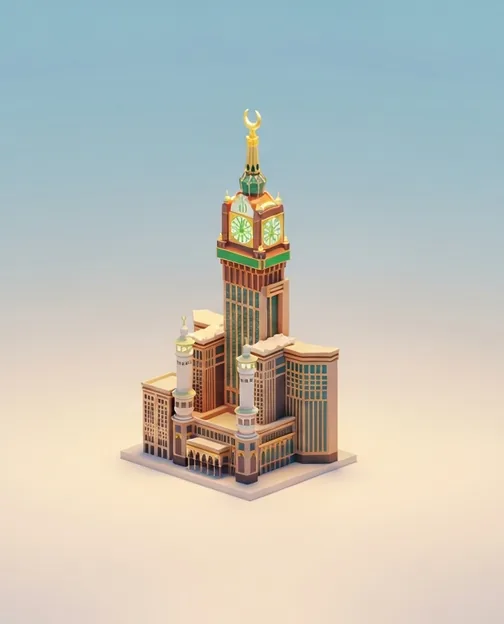
The Clock Tower forms part of the Abraj Al-Bait complex beside the Grand Mosque. Its museum presents exhibits on space, science and the Makkah Clock, with views of the mosque. Check current museum visiting arrangements before going.
Jabal al-Nour
The Cave of Hira is near the summit of Jabal al-Nour. It is associated with the first Quranic revelation to the Prophet ﷺ. The ascent becomes steeper and rougher toward the cave, so consider the terrain before planning a visit.
By Jabal al-Nour
Hira Cultural District includes the Revelation Exhibition, with displays on the revelation and the Prophet’s ﷺ biography. A prepared trail leads toward the cave, but its upper section is rougher; check current exhibition and tour arrangements.
Jabal Thawr
The Cave of Thawr is near the mountain’s summit and is associated with the Prophet ﷺ and Abu Bakr (may Allah be pleased with him) during the migration to Madinah. Upper paths are described as rugged and difficult; check current access before setting out.
Makkah
The complex makes the Kiswa, the covering of the Kaaba. Accounts of a production visit describe silk preparation, weaving and embroidery. Confirm current arrangements for independent visitors before making plans.
Al-Taneem
Masjid Aisha is a masjid in Al-Taneem associated with Aisha (may Allah be pleased with her) entering ihram during the Farewell Hajj. Reported nearby facilities include parking, restrooms and water coolers; confirm transport before travelling.
Near Al-Hajun
Masjid al-Jinn is a historic masjid near Al-Hajun and Al-Mualla Cemetery. It stands beside the Second Ring Road, with reported parking nearby. You can include it in a ziyarat route; check current access locally.
Makkah holy sites
Mina, Arafat and Muzdalifah are the holy sites associated with Hajj. Mina contains the Jamarat facility, while Arafat and Muzdalifah are also associated with Hajj rites. Access and road controls change by season; check official notices.
Umm Al-Joud
This exhibition documents the development of Masjid al-Haram in Makkah and the Prophet’s Mosque in Madinah. Displays include models, manuscripts and items connected with the Kaaba. Check current visiting and ticket arrangements.

Time between prayers for Masjid al-Haram, Zamzam and Safa and Marwa, with an exit before the next prayer.
For a visitor with limited free time in Makkah, this half day begins after a prayer at Masjid al-Haram. Spend time in the mosque, pause for Zamzam water, then walk through the Mas'a, the covered route between Safa and Marwa. Leave before the next prayer rather than extending the visit into another prayer period. First, arrange your arrival around prayer times shown in Nusuk or the Haram's published timetable. Live crowd indicators from the authority can help you assess conditions in the Mataf and Sa'i areas before you go.

Prayer-led days at Masjid al-Haram, with daytime rest and short visits to Zamzam and the Clock Tower.
For visitors spending Ramadan’s final days in Makkah, these three days centre on Masjid al-Haram and rest between visits. Begin with Asr through Isha and a stop for Zamzam water. Rest the next day before a short Clock Tower outing, then return to the mosque after Isha. On the final day, see Safa and Marwa before the last prayers of your stay. Arrange your place to stay first. Use Nusuk or the Haram’s published timetable for prayer times. Check the official source for current access arrangements. Ramadan dates depend on moon sighting.

A day at Masjid al-Haram, a Haramain train journey, and a day at Masjid an-Nabawi.
For visitors joining the two holy cities, the first day centres on Masjid al-Haram and Zamzam. The second is your Makkah departure day: travel by Haramain train and arrive in Madinah. Spend the third day at Masjid an-Nabawi, with a Rawdah visit at the time on your permit. Arrange the Rawdah permit through Nusuk first, then choose a train that fits your travel day. For prayer times, refer to the Nusuk app or the official published timetable.

A prayer-led Makkah stay covering Masjid al-Haram and the holy sites under an authorised Hajj programme.
For pilgrims travelling under an authorised Hajj programme, the stay begins with arrival, rest and Masjid al-Haram. Programme-led movement then takes you through Mina, Arafat and Muzdalifah, followed by the Jamarat Bridge. You return to the mosque before a final day for rest and departure. Arrange your programme details with your operator first; movement through the holy sites follows official instructions. Consult the Ministry of Hajj and Umrah and Nusuk for current information. Nusuk provides prayer times. Hajj dates depend on moon sighting.
Swipe for more plans

Meet after Maghrib, browse Souq Al Khalil, share a meal near the Haram and stay for Isha.
For visitors meeting friends or relatives in Makkah, the evening starts with Maghrib at Masjid al-Haram. Meet afterwards at an agreed point, browse Souq Al Khalil, then head to the Makkah Royal Clock Tower for shopping or a meal before Isha at the Haram. Saleeg, a creamy rice dish commonly served with chicken, is one Hijazi option to look for. Agree on a meeting point, then check the Haram’s published timetable for prayer times. The stops remain near the Grand Mosque, leaving the evening centred on prayer and time together.

Two days in Makkah shaped around Maghrib, Isha, Souq Al Khalil and the Makkah Royal Clock Tower.
For a Ramadan stay in Makkah, spend the first afternoon at Masjid al-Haram before the fast-breaking hour, then visit Souq Al Khalil after Isha. On the second day, spend the afternoon at the Clock Tower complex before returning to the Haram for Maghrib and Isha. Arrange your place to stay first, so you know where you will return between outings. Check the Haram’s published timetable for prayer times. Ask staff about current entry arrangements. Ramadan dates depend on moon sighting.
Swipe for more plans

A business visitor’s afternoon for the Clock Tower, its science museum and shopping levels.
If business leaves you a free afternoon in Makkah, spend it at the Makkah Royal Clock Tower complex. After Dhuhr, see the tower and visit the museum on its observation deck for exhibits about space, science and the Makkah Clock. Then browse Abraj Al Bait Mall before Asr, or follow the same order between Asr and Maghrib. Arrange the museum visit first by checking current access arrangements at the complex. Consult the Haram’s published timetable for prayer times, and let the next prayer set the pace.

From Haramain Makkah station to your hotel district, then prayer at Masjid al-Haram and Zamzam
For visitors arriving from Jeddah or Madinah, this one-day visit begins at Haramain Makkah station in Ar Rusayfah. Arrange your onward journey to your hotel district first. Confirm current connections with the train operator; the announced bus route to the Grand Mosque area was a trial, not a confirmed current service. After settling in, visit Masjid al-Haram for whichever prayer follows your arrival, then drink Zamzam from a dispenser. Consult the Haram’s published timetable for prayer times rather than planning around an assumed arrival hour.

A prayer-led day at Al-Mu'alla, two historic masjids and Makkah Museum, with travel by car or taxi.
For visitors interested in early Makkah, the day begins after Fajr outside Jannat al-Mu'alla, then continues to Masjid al-Jinn and the site associated with Masjid al-Rayah. After Dhuhr, Makkah Museum offers exhibits on the region’s past. Arrange a car or taxi first. Before setting out, ask a local operator to confirm al-Rayah’s current location and access arrangements. Follow the Haram’s published timetable for prayer times; let Asr and Maghrib shape your afternoon departure.

Al-Hudaybiyah on one day, followed by the Kiswa Complex and a mosque architecture exhibition.
For groups based in Makkah, two days give Al-Hudaybiyah its own visit before the Kiswa Complex and the Exhibition of the Two Holy Mosques Architecture. Set out after Fajr on the first day and return with time for the later prayers. On the second, place the indoor visits around Dhuhr and Asr according to confirmed access. Arrange your Kiswa Complex visit with its operator, then confirm the exhibition’s current arrangements. Consult the Haram's published timetable for prayer times.
Swipe for more plans

A road day through Taif’s museum, park and mountain area, returning to Makkah by evening.
For visitors based in Makkah during June to August, Taif offers a day in the comparatively mild highlands. Leave after Fajr for Shubra Palace, spend time at Al Rudaf Park, then visit Al Hada before returning to Makkah by evening. Plan the road day around Dhuhr, Asr and Maghrib. Arrange your driver and return route first, and ask the operator to confirm access to the palace and any cable-car plans. Consult the Haram’s published timetable for prayer times.

Travel from Makkah to Al-Balad and the Red Sea coast, then return after an evening by the fountain.
For visitors based in Makkah, this day pairs a Haramain train ride with historic Jeddah and the Red Sea coast. Travel after Fajr, spend the middle of the day in Al-Balad, then head to the Corniche around Asr and King Fahd's Fountain after Maghrib. Return to Makkah in the evening. Arrange both train journeys first. Choose services that leave time for transfers within Jeddah, and confirm the current timetable and fares with the operator. Check prayer times in the Haram’s published timetable before setting out.

A summer road visit to Taif city, followed by the mountain roads through Al Hada and Al Shafa.
For visitors based in Makkah during June to August, these two days pair Taif city with its highlands. After Fajr on the first day, travel to Shubra Palace and Al Rudaf Park, with Dhuhr between the stops. On the second, take the road toward Al Hada, then continue to Al Shafa before the return drive. Arrange road transport first, and check conditions on each travel day, particularly before a mountain pass. Shape departures and returns around the five daily prayers; consult the Haram’s published timetable for prayer times.

Two days centred on Masjid al-Haram, followed by Al-Balad and the Red Sea coast in Jeddah.
For visitors dividing their stay between Makkah and Jeddah, the first two days centre on prayers at Masjid al-Haram and a stop for Zamzam. After Dhuhr on the second day, the Haramain train takes you to your Jeddah base. The following days bring Al-Balad, the Corniche and King Fahd's Fountain before departure. Book your train ticket first, then confirm the operator’s schedule. For prayer times, consult the Haram's published timetable and current local times in Jeddah. Confirm your departure terminal with your airline before your final transfer.
Swipe for more plans

Prayer-led days with room breaks, official mobility services and shorter stops near Masjid al-Haram.
For visitors with mobility or access needs, or those travelling with elders, these 2 days leave time to return to the room between prayers. Day 1 centres on Masjid al-Haram and Zamzam water; day 2 pairs Abraj Al Bait Mall with Souq Al Khalil before evening prayers. Arrange the room-to-masjid route first. The official Masjid al-Haram location guide shows dedicated routes and elevators, and wheelchair services can be booked in advance through the Unified Mobility Platform. Refer to the Haram’s published timetable for prayer times. No stop or route is assumed to be step-free.

Time at Masjid al-Haram, an indoor museum visit and an afternoon walk, with rest between.
For a family with children, these two days alternate prayer at Masjid al-Haram with rest and one outing each day. After Fajr on the first day, return to your lodging before visiting Makkah Museum. On the second, visit Al-Naseem Walkway in the late afternoon, then head to the mosque for Maghrib and Isha. Arrange lodging first so the breaks work for your family. Use the Haram’s published timetable for prayer times. Check the official source for current visiting arrangements at the museum and walkway.

Prayer-led days with rest, a museum visit, an evening walk and time in the Hira area.
For a multi-generation family, five days in Makkah can follow the daily prayers without filling every interval. Begin at Masjid al-Haram and visit the Zamzam dispensers. Give Makkah Museum its own day, then spend an evening at Al-Naseem Walkway. A shopping morning and time at Hira Cultural District precede a lighter departure day. Arrange guidance for the Umrah rites with your operator or scholar first. Nusuk, the official platform for permits and bookings, provides prayer times; the official Masjid al-Haram location guide shows accessibility routes and services.
Swipe for more plans

Two prayer-led days at Hira’s exhibition and mountain, the Makkah Museum, and Masjid al-Jinn.
For solo visitors and students of Islamic history, day 1 begins at Hira Cultural District and continues toward the Cave of Hira. Day 2 pairs the Makkah Museum with Masjid al-Jinn. Plan departures around Fajr, Dhuhr, Asr, Maghrib and Isha; consult the Haram’s published timetable for prayer times. Arrange the Hira visit first by confirming current exhibition, tour and trail access with the operator. November to February suits an outdoor visit, but assess the climb’s steeper, rougher sections before continuing.

Three museums and the Clock Tower mall levels, with visits arranged around daily prayers.
For visitors replacing outdoor plans with indoor stops in Makkah, these two days bring together three museums and the Clock Tower mall levels. After Fajr on the first day, visit the tower museum, pause for Dhuhr, then spend time at the mall. On the second day, see the architecture exhibition in Umm Al-Joud before a prayer break and a visit to Al Zahir Palace. Confirm each museum’s current opening hours and entry arrangements before you go. Set your prayer breaks using the Haram’s published timetable.

A winter stay with unhurried museum visits, heritage exhibitions and the five daily prayers.
For a longer stay in Makkah, four unhurried days leave room for the five daily prayers and visits to museums and heritage exhibitions. Begin at Makkah Museum. On the next day, pair the Exhibition of the Two Holy Mosques Architecture with the Kiswa Complex, then visit the Clock Tower Museum and Hira Cultural District on separate days. Arrange the Kiswa visit first by confirming access with its operator; let that arrangement set the order of your visits that day. Refer to the Haram’s published timetable for prayer times, and check each venue’s current visiting arrangements.
Swipe for more plans

A day for browsing Souq Al Khalil, the Clock Tower shopping areas and Al Hijaz Mall around prayers.
For visitors setting aside a day to shop in Makkah, begin with Souq Al Khalil near Masjid al-Haram, then browse the Makkah Royal Clock Tower’s shopping areas. After a pause around Dhuhr and Asr, continue to Al Hijaz Mall for jewellery and fabrics. Let Maghrib and Isha shape the end of the day. Check the Haram’s published prayer timetable, then confirm shop hours and your route to the mall before setting out.

Early visits to the caves associated with the first revelation and the migration to Madinah.
For visitors spending two days in Makkah, the hill visits begin after Fajr, leaving later prayers outside the climbs. Day 1 takes you to Jabal al-Nour and the Cave of Hira, followed by Hira Cultural District. Day 2 is for Jabal Thawr and the Cave of Thawr. Arrange transport and confirm current access to both hills before you set out. Use the Haram’s published timetable to place each departure after Fajr. Hira’s prepared trail becomes steeper and rougher; the upper route at Thawr is reported to be difficult.
Check Nusuk and the Ministry of Hajj and Umrah for guidance that applies to your visit.
Nusuk provides an Umrah-permit service. Check the app or website and the Ministry of Hajj and Umrah for guidance that applies to your visit.
Permit availability and arrangements may vary by season and travel status. Confirm them before setting out for Umrah.
For visa information, check the Ministry of Hajj and Umrah and official Nusuk guidance rather than relying on accommodation details.
Use Nusuk or the official Umm al-Qura timetable for Makkah prayer times.
Use the Nusuk app or the official Umm al-Qura timetable for Makkah prayer times; the times change with the date.
Allow extra travel time around Fajr, Dhuhr, Asr, Maghrib and Isha, particularly when many worshippers are gathering.
Check the Haram authority’s live indicators for crowd density in the Mataf and Mas'a. They do not show occupancy across every prayer area.
Check your walking route; straight-line distance from the Kaaba is not walking distance.
If you plan to walk from your stay, check the actual route. A listing’s straight-line distance from the Kaaba is not a walking distance.
Makkah Bus serves city neighbourhoods and the Grand Mosque area; check the operator’s current route information, timetable and fares.
Taxis are another option. Check the operator for current fares and allow for traffic controls during busy periods.
Some listings on this site report a shuttle to the Haram. Confirm transport details directly before relying on a listing.
Makkah has no airport of its own; check your onward route from Jeddah or Taif.
Makkah has no airport of its own. King Abdulaziz International Airport is in Jeddah; the reported distance to central Makkah is about 95 km, and travel varies with traffic and controls.
The Haramain station connected to the Jeddah airport terminal has trains to Makkah station, with a journey of about 45 to 50 minutes. Check the current railway schedule and fares.
Makkah’s Haramain station is in Al-Rusaifah, reported as about 3.5 km from the Grand Mosque. Check onward transport before arrival.
Taif International Airport is another nearby airport. Check your onward route to Makkah; confirm travel details before setting out.
Dress modestly, keep corridors clear and follow the Haram’s signs and staff.
Dress modestly in public. Guidance for mosque visits advises women to bring a scarf for a hair covering if needed.
Respect marked prayer and movement areas. Keep corridors clear, and avoid loud talking or jostling that could disturb others.
Leave large bags at your accommodation or use designated safekeeping facilities. Do not leave belongings at mosque entrances or in courtyards.
Designated prayer halls for women are available. Keep children accompanied and follow the Haram’s signs and staff.
Check the Haram’s official location guide and current wheelchair-service availability.
The Haram has designated routes and elevators for older visitors and people with disabilities. Consult its official location guide before travelling.
Wheelchair services can be booked in advance through the Unified Mobility Platform; the authority also reports manual-wheelchair service centres.
Electric-wheelchair service is reported within the Grand Mosque. Check current availability and ask staff for directions when you arrive.
Plan outdoor ziyarat around the heat; Zamzam is available at Grand Mosque dispensers.
Makkah is hot for much of the year. Consider the weather and the return journey when planning outdoor ziyarat.
Zamzam water is available at Grand Mosque dispensers. Use the drinking areas considerately and avoid crowding around them.
Ramadan and Hajj bring heavy crowds; check live indicators and current official notices.
Ramadan and Hajj bring heavy crowds. Check live Haram crowd indicators, transport information and current Ministry of Interior notices.
Hajj-season road, vehicle and entry controls can change. Check official notices before travel rather than assuming an earlier season’s arrangements apply.
Ramadan brings large gatherings to Masjid al-Haram, particularly during its last ten nights. Hajj brings pilgrims to Makkah and the surrounding holy sites, with seasonal entry and road controls. Check current official notices and allow extra time for travel around the prayers.
The Haramain train connects the airport station to Makkah station in about 45 to 50 minutes; check the current schedule and fares. Airport taxis and ride-hailing services are also listed. The reported distance from Jeddah airport to central Makkah is about 95 km; travel varies with traffic and controls.
Listings on this site include 26 stays within 500 m and 76 within 1 km of the Kaaba, measured by straight-line distance. These counts do not describe walking routes or journey times. Check each listing’s position and your route to the Haram before booking.
Nusuk provides a service for obtaining an Umrah permit. The Ministry of Hajj and Umrah says permits are obtained through Nusuk; availability and requirements can vary by season and travel status. Check Nusuk and the Ministry’s current guidance before setting out.
Saudi public guidance calls for modest dress. Guidance for mosque visits suggests bringing a scarf for a hair covering. At the Haram, respect marked worship and movement areas, and follow signs and staff directions. Check current official guidance if you have a specific dress question.
Periods between the major Ramadan and Hajj gatherings may feel less crowded, but conditions still change around each prayer. Check the Haram authority’s live Mataf and Mas'a crowd indicators before going. They describe those areas rather than every prayer space in the mosque.
The train arrives at Makkah Haramain station in Al-Rusaifah, reported as about 3.5 km from the Grand Mosque. Plan onward transport separately and check the railway’s current timetable and fares. Makkah Bus and taxis serve the city, but confirm the route you need.
There are 29 listings on this site that report a shuttle to the Haram; confirm details with the accommodation. At Masjid al-Haram, the authority reports designated mobility routes and wheelchair services, including advance booking through the Unified Mobility Platform. Check current availability.