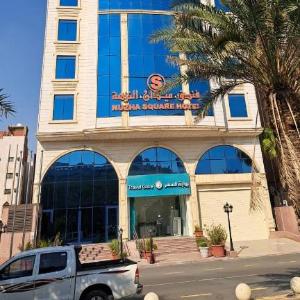

Makkah is surrounded by mountains and hills that form part of the city’s setting and history. Several are associated with events in the life of Prophet Muhammad ﷺ, the Hijrah to Madinah, or the development of the city.
Their steep slopes and rocky terrain help explain how the city grew among the surrounding hills, with the Grand Mosque at its centre.
This guide covers seven mountains and hills connected with Makkah, including Jabal al-Nour, Jabal Thawr and Jabal Qubais. Some are known for links to religious history, while others are associated with the city’s development or views over its buildings.
The effort involved in reaching a mountain varies. Before setting out, consider the climb, the time it may take and your own fitness. The notes below distinguish between each mountain’s setting and the traditions or historical accounts associated with it.
Jabal al-Nour
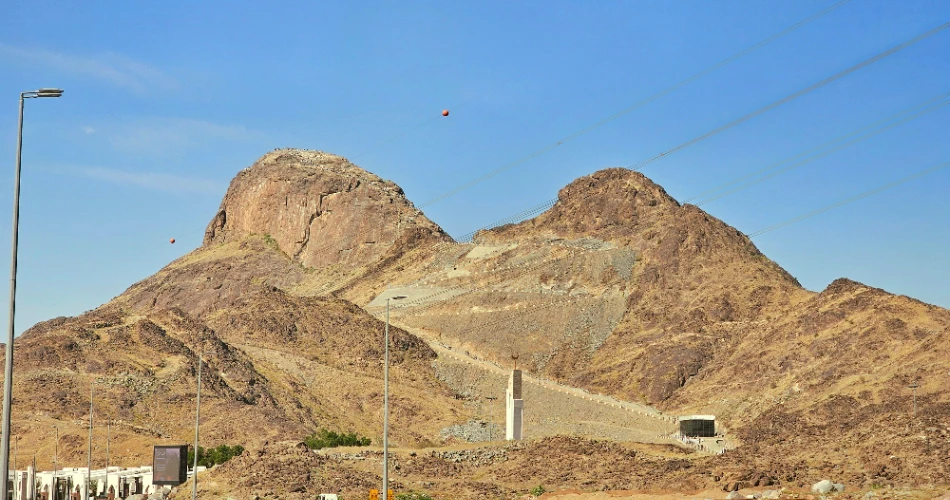
Jabal al-Nour is among the best-known mountains in Makkah. The Cave of Hira, on the mountain, is associated with the first revelation of the Quran to Prophet Muhammad ﷺ through Jibreel (peace be upon him). The mountain is about 642 metres above sea level, and the walk to the cave typically takes around one to two hours.
It is a sustained uphill climb rather than a short stroll, so allow time for the ascent and descent and consider your fitness before going.
Some visitors climb early in the morning to see the sunrise over Makkah. The cave and mountain are closely linked to the account of the first revelation, while the route itself calls for preparation and steady effort.
Jabal Thawr
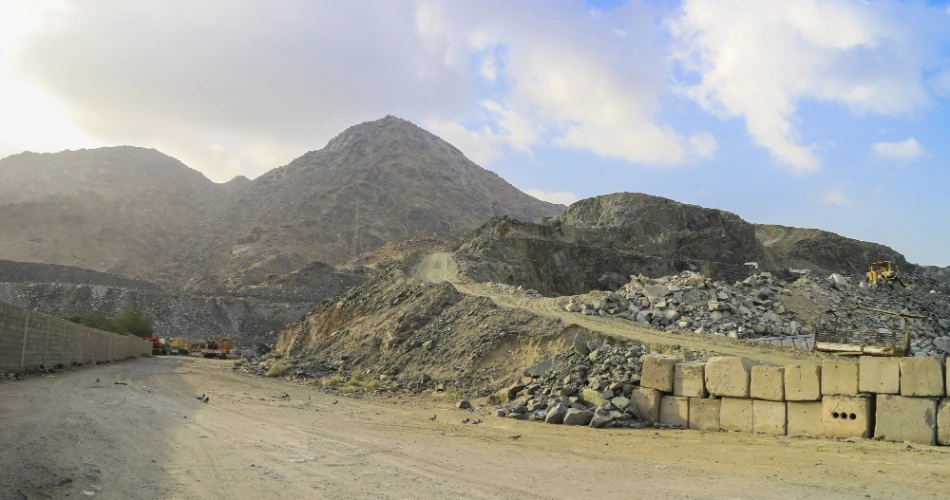
South of Makkah, Jabal Thawr is known for the Cave of Thawr. During the Hijrah to Madinah, Prophet Muhammad ﷺ and Sayyiduna Abu Bakr (may Allah be pleased with him) sought refuge in the cave. A traditional account of the cave’s entrance tells of a spider’s web and a dove’s nest discouraging those who came searching for them.
Visitors interested in the Hijrah may value the site for its connection to that journey. The climb to the cave is long and difficult, usually taking two to three hours. Allow for the effort and consider your ability before setting out. The mountain’s association with the Hijrah gives context to the challenges faced along the route to Madinah.
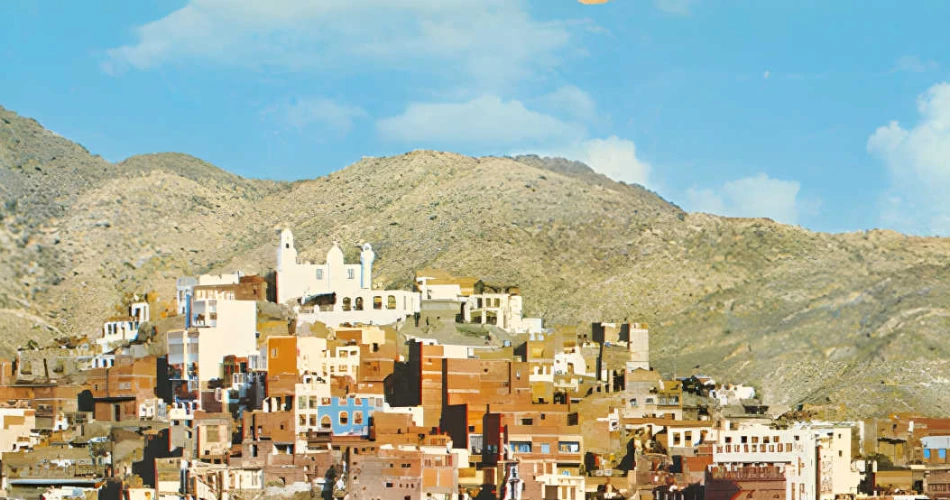
Jabal Omar
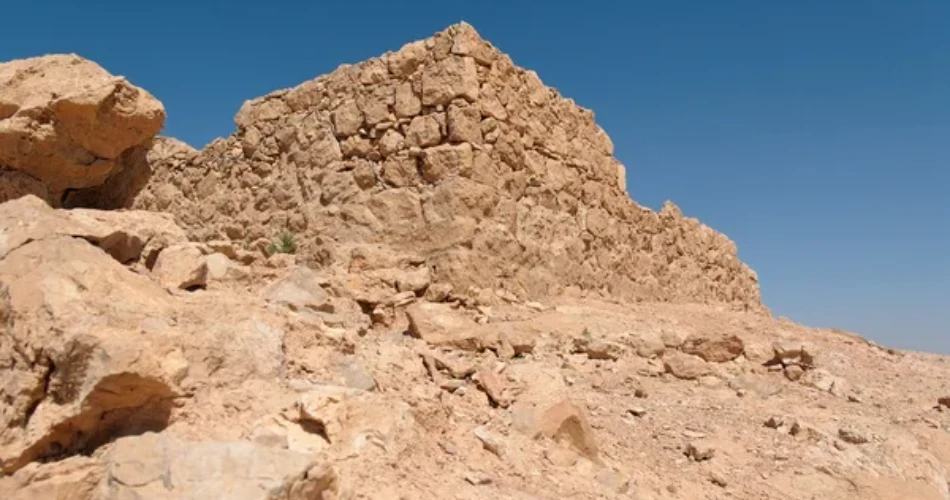
Jabal Omar is a chain of hills close to the Grand Mosque, also known as Masjid al-Haram. The area has undergone major urban development to accommodate the growing number of pilgrims, and now includes hotels and retail complexes. Its present-day built-up character contrasts with its earlier history as inhabited hills.
Jabal Omar shows how the districts around the mosque have changed as Makkah has grown. Visitors in this area will encounter an urban district rather than an undeveloped mountain setting. Its location near the Grand Mosque makes it different from the higher hills that call for a longer climb.
Jabal Qubais
Jabal Qubais lies close to the Grand Mosque and is connected with accounts from Makkah’s past. Some historical accounts identify it as a mountain made by Allah, while other traditions associate the hill with the Black Stone before it was placed in the Kaaba. These are accounts associated with the mountain, not details to present as established history.
Jabal Qubais is now largely built over, and its surroundings have changed with the growth of the city. Its position near the mosque gives it a place in descriptions of Makkah’s history, though visitors should not expect an open mountain setting. The traditions help explain why the hill is mentioned in accounts of the city.
Jabal Rahmah
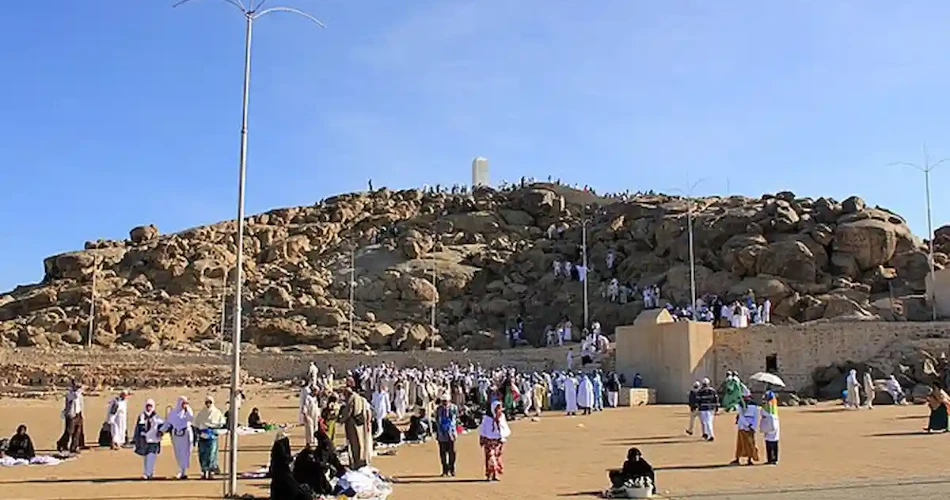
Jabal Rahmah stands on the plain of Arafat. It is associated with the Farewell Sermon of Prophet Muhammad ﷺ during his final pilgrimage. A tradition also connects the place with Adam (peace be upon him) and Hawwa (Eve), but this account does not establish it as their confirmed meeting place.
A white pillar marks the hill. During Hajj, pilgrims gather in the area to pray and reflect. Its position on the plain of Arafat sets it apart from the hills close to the Grand Mosque. The site is associated with accounts of Hajj and the final pilgrimage of Prophet Muhammad ﷺ.
Jabal Khandama
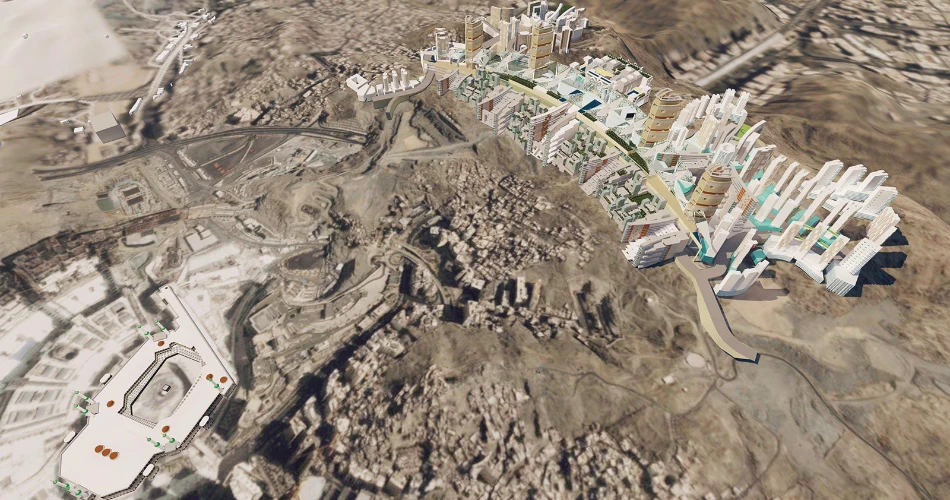
Jabal Khandama is near the Kaaba and is known for views over the Grand Mosque and the city. Its position close to central Makkah makes it a point of interest for visitors who want to see the city from higher ground.
The mountain has also been described as a place to step away from nearby city streets while remaining close to the centre.
Visitors interested in photography or the city’s terrain may value the elevated outlook. Consider the route and effort required in advance if you are not used to walking uphill. The view provides a different perspective on the close-packed buildings and the area around the mosque.
Jabal Hindi
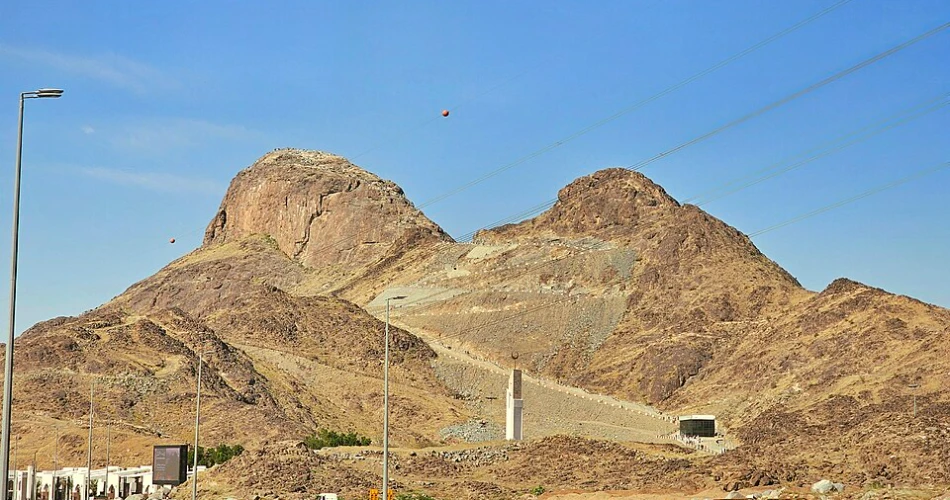
Jabal Hindi is less widely known than some of Makkah’s other hills. Its name is linked to Indian Muslim pilgrims who historically rested and worshipped at the site during Hajj. That association reflects the many communities that have travelled to Makkah for pilgrimage over time.
Visitors interested in the city’s social history may find this background useful. The story connected with Jabal Hindi is about pilgrims and their experiences, rather than a particular building or event in the city. It is one example of the varied connections between Makkah’s hills and the people who have visited for Hajj.
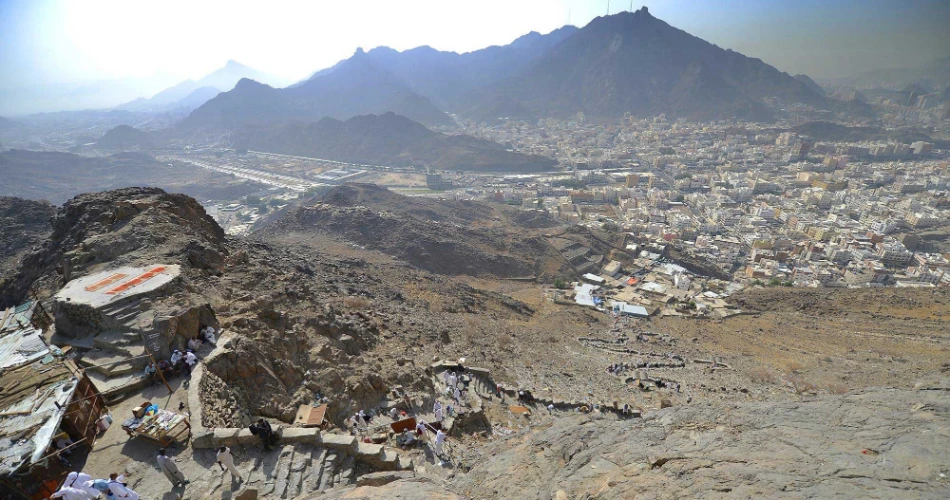
Jabal Qaiqan
Jabal Qaiqan has been described as a mountain near an entrance to Makkah and as a lookout point for watching arrivals or possible threats. This association gives an idea of the strategic role mountains could play in accounts of the city.
It is less visited than some of the other mountains in this guide, and its interest lies chiefly in its place in descriptions of Makkah’s history and surroundings.
The mountain is one of several that help explain the city’s setting among hills. Its account differs from those of Jabal al-Nour and Jabal Thawr, which are known for their links to specific events in the life of Prophet Muhammad ﷺ.
Final thoughts
The mountains and hills associated with Makkah connect the city’s surroundings with accounts of the first revelation, the Hijrah and the city’s development. Their settings differ: Jabal al-Nour and Jabal Thawr involve demanding climbs, while Jabal Omar is now part of a developed district.
These places can add context to a visit for Hajj, Umrah or another reason. For more ideas around the city, see this guide to places to visit in Makkah.